Flame Retardant Masterbatches for Thermoplastics

Оглавление

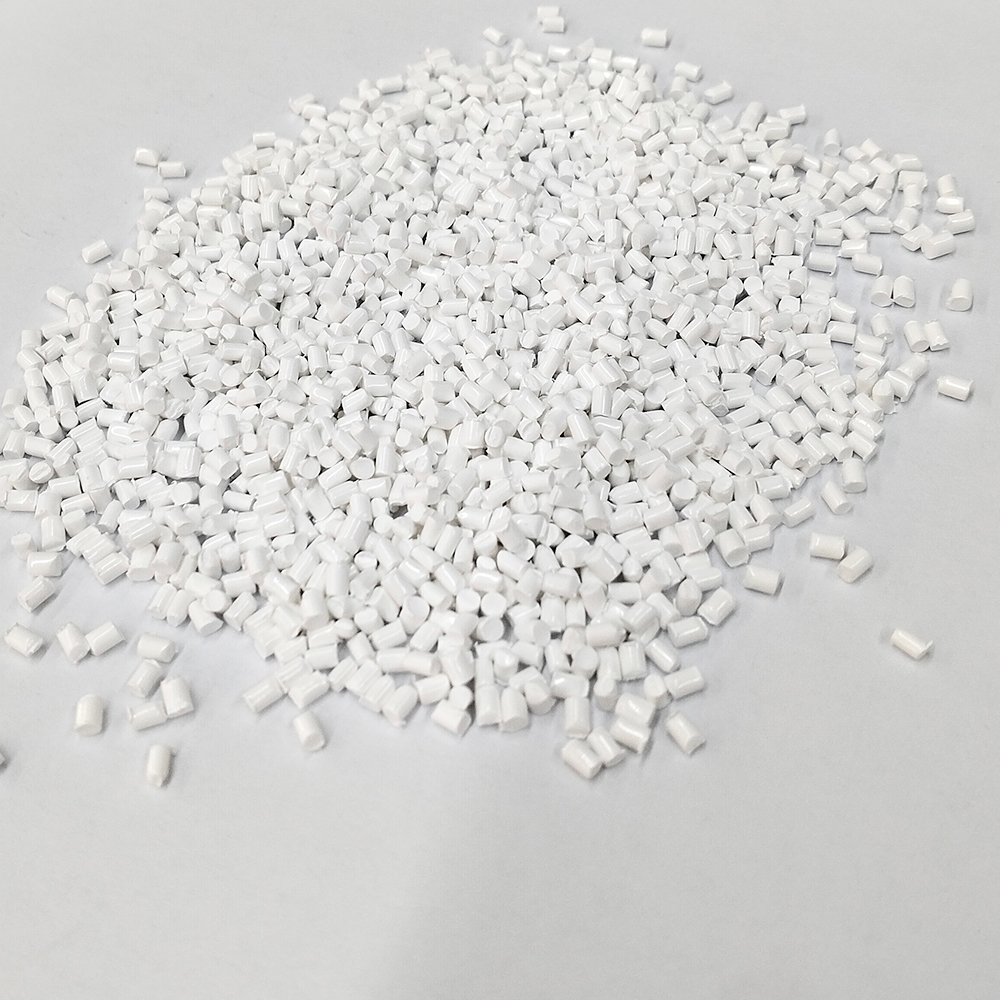
Flame retardant (FR) masterbatches are concentrated mixtures of fire-resistant additives encapsulated within a carrier resin. They are added to raw polymers during manufacturing—such as injection molding or extrusion—to delay ignition, slow flame spread, and reduce smoke generation.

Thermoplastic materials are naturally prone to burning because, like most hydrocarbon-based substances, they readily ignite once exposed to sufficient heat. During combustion, heat breaks down their long molecular chains into volatile hydrocarbons along with hydrogen and hydroxyl radicals. These high-energy byproducts react rapidly with oxygen, generating more heat and allowing flames to propagate.

To counter this, flame retardant additives are incorporated into polymers such as polyolefins, polycarbonate, polyamide, and polyester. Their function is to reduce ignition risk, slow flame propagation, suppress smoke formation, and minimize dripping. The primary purpose is to delay burning long enough to protect people in the event of a fire, with the added benefit of reducing property damage.

Flame-retardant plastics are widely used in everyday environments—homes, offices, vehicles, public transportation, electronics, and industrial equipment. Many markets and products require them under strict building codes and industry standards. Examples include construction fabrics, insulation materials, banners, roofing, automotive interiors, aircraft components, seating, mattress covers, electronic housings, wiring, power cables, tunnels, and more.

How Flame Retardants Work

A fire requires three elements: a fuel source, oxygen, and heat. Flame retardants interfere with one or more parts of this triangle, either physically or chemically.

Physical mechanisms include:

  • Cooling the substrate below its combustion temperature

  • Creating a barrier (solid or gaseous) to block oxygen

  • Releasing inert gases that dilute combustible vapors

Chemical mechanisms include:

  • Interrupting gas-phase free-radical reactions

  • Encouraging the formation of a carbon-rich char layer that insulates the polymer

Commercial flame retardants most commonly used today include halogenated compounds, phosphorus-based additives, and various metal oxides.

ТипCharacteristicsТипичные области применения
HalogenatedHighly effective and cost-efficient; typically contain bromine or chlorine.Automotive parts, electronics housings, PE films, etc.
Halogen-FreeEnvironmentally friendly; uses phosphorus, nitrogen, or metal hydroxides to avoid toxic smoke.Public transport interiors, green building materials, consumer electronics, PET film, etc.
Carrier-SpecificFormulated for specific resins like Polyethylene (PE), Polypropylene (PP), Polyamide (Nylon), or Polycarbonate (PC), Polyethylene Terephthalate(PET).Electrical conduits, wiring harnesses, lithium battery housings.

Halogen-Based Flame Retardants

Organic halogen compounds—particularly brominated types—are the most widely used plastics flame retardants. They work by neutralizing high-energy radicals involved in combustion, significantly reducing the fuel gases released.

Brominated flame retardants offer excellent cost-to-performance value. They usually require lower loading levels than metal hydroxides such as ATH or magnesium hydroxide and maintain good mechanical integrity in the polymer. Their easy processability makes them especially suitable for polyethylene and polypropylene films.

Chlorinated flame retardants are also common and typically supplied as chlorinated paraffins or cycloaliphatic structures. Although less expensive than brominated types and more resistant to light degradation, they are less thermally stable and may be more corrosive during processing. Cycloaliphatic chlorinated additives withstand higher temperatures—up to about 320°C—than paraffin grades.

Both brominated and chlorinated flame retardants require synergists, such as antimony trioxide, zinc borate, or zinc molybdate. Synergists work by forming compounds (e.g., antimony trihalides) that improve radical suppression, boosting the effectiveness of the halogenated flame retardant.

While some brominated compounds have faced scrutiny, European Union reviews—including studies referenced in 2005—have found commercial decabromodiphenyl ether (decabrom) safe for human health and exempted it from RoHS restrictions.

Non-Halogen Flame Retardants

Non-halogenated flame retardants fall into two categories: phosphorus-based char formers и metal oxide endothermic additives.

Phosphorus-Based Flame Retardants

Organic and inorganic phosphorus compounds work in multiple ways:

  • Neutralizing combustion radicals in the vapor phase

  • Releasing phosphoric acid under heat, which alters polymer decomposition

  • Promoting char formation to block oxygen and heat access

Although highly effective, phosphorus additives may degrade at extrusion temperatures above 400°F (≈204°C), potentially affecting polymer properties or damaging processing equipment.

Metal Hydroxides

Aluminum trihydrate (ATH) and magnesium hydroxide are the most common halogen-free options.

  • ATH decomposes at 180–200°C, absorbing heat and forming aluminum oxide. It is inexpensive and naturally abundant but limited to lower processing temperatures.

  • Magnesium hydroxide decomposes at ~300°C and meets strict regulatory requirements. However, both materials require high loadings—sometimes up to 65%—which can negatively affect mechanical strength and processability.

Other flame-retardant chemistries include boron compounds, melamine, ammonium sulfamate, and emerging technologies such as nanoclays and silicon-based additives that aim to deliver flame protection with lower addition levels.

Formulating Flame Retardant Masterbatches

Flame-retardant masterbatches are typically engineered to match the rheology and molecular characteristics of the base polymer. The recommended dosage depends on the flame-resistance rating required.

For polyolefins:

  • 10–14% masterbatch addition typically meets UL 94 V-2

  • 18–20% is usually needed for UL 94 V-0

Achieving a V-0 rating is easier with a polymer of high molecular weight and low melt flow index. Because polyolefins tend to drip when burning, incorporating fillers such as clay can help minimize dripping—though this may reduce the efficiency of halogenated flame retardants.

Selecting the Right Flame Retardant

Choosing the correct flame-retardant system requires answering several key questions:

  1. Which type is permitted—halogenated or non-halogenated?

  2. Which standards apply? UL 94, E 84, MVSS, ASTM, VW-1, etc.

  3. What classification is needed? V-2, V-1, or V-0 for UL-94

  4. Are mechanical properties critical? (e.g., tensile strength, elongation)

  5. Is blooming a risk for processes like sealing or printing?

  6. Is UV resistance important? Will the product be exposed to sunlight?

If you need огнестойкий мастербатч for your application, please contact flame retardant masterbatch supplier to give you flame retardant solution.

Addendum: Key Flammability Test Standards

UL-94 Vertical Burning Test

Evaluates flammability and dripping for polymers used in electronics and appliances. Samples are burned twice for 10 seconds each, with flame duration and dripping effects recorded.

Ratings include:

  • V-0: ≤10 seconds after-flame; no dripping that ignites cotton

  • V-1: ≤30 seconds after-flame; no ignition of cotton

  • V-2: Same as V-1, but dripping that ignites cotton is allowed

Limiting Oxygen Index (LOI)

Measures the minimum oxygen concentration needed to sustain combustion.

UL-181

Used for evaluating materials in air-duct systems.

UL-214

Assesses flame propagation in films and fabrics using small- and large-flame tests.

ASTM E-84

Determines flame spread and smoke development for building materials on exposed surfaces.

Motor Vehicle Safety Standard 302

Requires interior automotive materials to burn at <4 inches/min for safety compliance.

Теги
Контакт

Узнайте больше знаний и тенденций в индустрии мастербатчей из нашего блога.

Электретный концентрат

Решающая роль электретной маточной смеси в повышении эффективности фильтрации из расплавленной ткани

Электретная маточная смесь представляет собой специально разработанную добавку, которая значительно повышает эффективность фильтрации тканей, полученных выдувом из расплава, позволяя им улавливать мелкие частицы посредством электростатического заряда.

Читать далее "
ПЭТ Мастербатч

Поднимите производство пластмасс на новый уровень с помощью высококачественных суперконцентратов ПЭТ Iplastar

Iplastar является мировым лидером в производстве суперконцентратов ПЭТ, известных тем, что создает яркие и насыщенные оттенки, недостижимые с помощью традиционных пигментов или красителей.

Читать далее "
мастербатч

Мастербатч: полное руководство по улучшению производства пластмасс

В современном производстве пластика мастербатч играет решающую роль в достижении желаемых свойств и эстетической привлекательности готовых изделий. Независимо от того, используется ли он для придания ярких цветов, улучшения характеристик материала или соответствия отраслевым стандартам, мастербатч является незаменимым решением для достижения стабильных высококачественных результатов.

Читать далее "
Прокрутить вверх

Расследование

Наша команда отправит лучшее предложение через 20 минут.

Расследование