
Infrared (IR) Masterbatch: Applications, Types, and Benefits

Mục lục

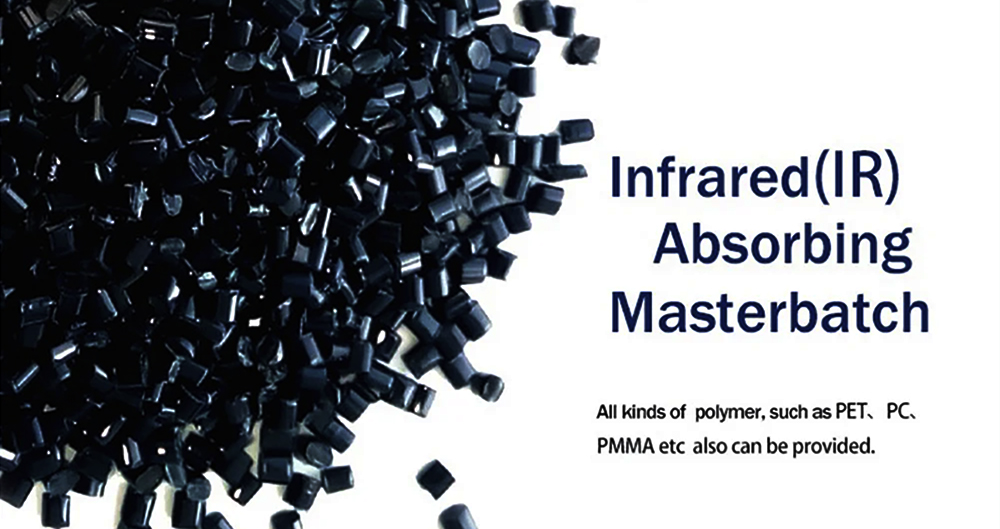
Infrared (IR) masterbatch is a high-performance plastic additive designed to regulate the interaction between polymer materials and infrared radiation. It is produced by dispersing specialized infrared-active pigments or nanoparticles into a compatible carrier resin such as PE, PET, PP, or PC.

By adding a small percentage of IR masterbatch during plastic processing, manufacturers can effectively absorb, reflect, or transmit infrared light while maintaining excellent transparency to visible light when required.

This advanced material is widely used in agriculture, construction, automotive, electronics, and recycling industries where thermal management and infrared performance are critical.

Main Types of Infrared Masterbatch

1. Infrared Absorbing (Heat Retention) Masterbatch

Infrared absorbing masterbatch is specifically formulated to capture and retain heat generated by infrared radiation. It is commonly incorporated into greenhouse films, helping maintain a stable internal temperature during cold nights and minimizing the risk of frost damage to crops.

In addition to agricultural films, this type of masterbatch is also used in architectural glazing, window films, and automotive applications to improve thermal insulation, reduce heat loss, and enhance overall energy efficiency.

2. Near-Infrared (NIR) Detectable Masterbatch for Recycling

Traditional black plastics containing carbon black cannot be identified by standard near-infrared (NIR) optical sorting equipment because carbon black absorbs infrared light. As a result, these plastics are often excluded from recycling streams.

Carbon-free NIR detectable masterbatches solve this problem by allowing black plastic products to reflect near-infrared radiation. This enables automated recycling systems to accurately identify, separate, and recycle black plastic components, supporting circular economy initiatives and improving recycling efficiency.

3. Infrared Transmission and Laser Protection Masterbatch

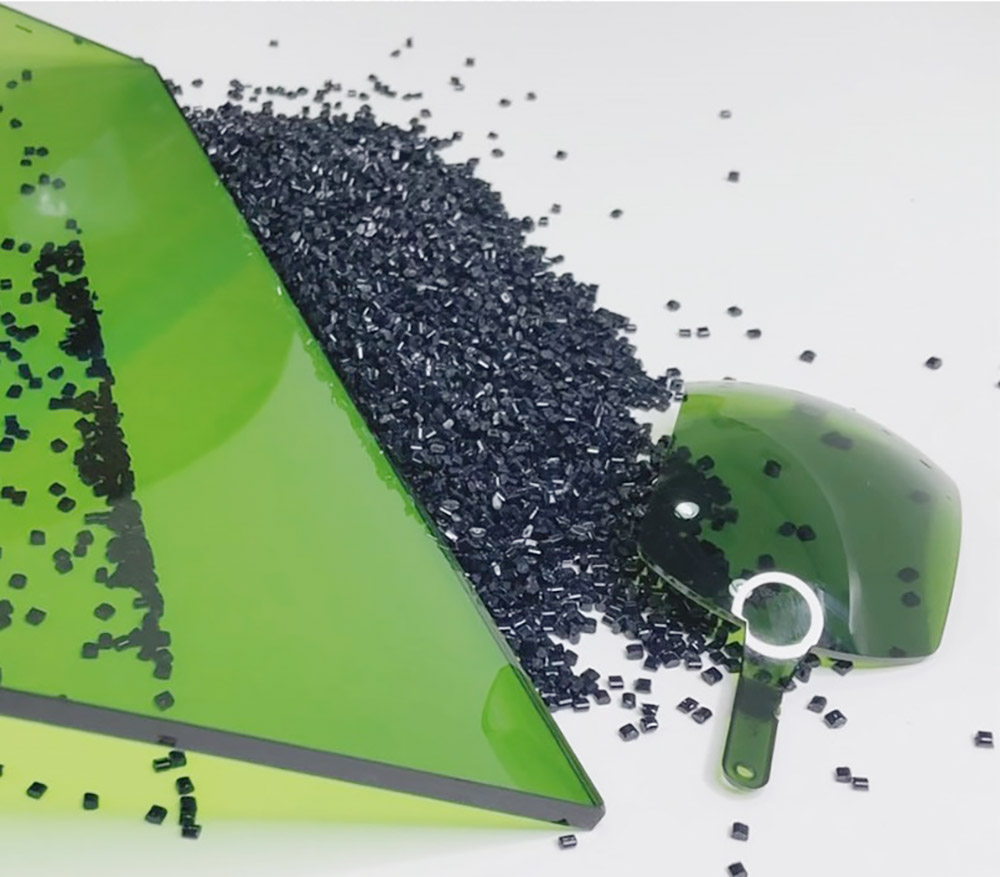
Infrared transmission masterbatch is engineered to block visible light while allowing infrared wavelengths to pass through. This unique characteristic makes it ideal for products requiring hidden infrared communication, such as remote control housings, security devices, sensor covers, and camera enclosures.

Specialized infrared masterbatches are also used in laser protection applications, where they help reduce exposure to harmful laser radiation in industrial and technical environments while maintaining the required optical performance.

Benefits of Infrared Masterbatch

Infrared masterbatch offers several advantages across a wide range of plastic applications, including:

  • Improved thermal insulation and heat management
  • Enhanced energy efficiency for buildings and vehicles
  • Better crop protection in greenhouse films
  • Compatibility with automated NIR recycling systems
  • Excellent dispersion and stable processing performance
  • High transparency to visible light when required
  • Suitable for various thermoplastic resins, including PE, PET, PP, and PC

Ứng dụng điển hình

Infrared masterbatch is widely used in:

  • Phim nhà kính nông nghiệp
  • Polycarbonate sheets and glazing panels
  • Automotive window films
  • Building insulation films
  • Plastic packaging
  • Electronic device housings
  • Remote control casings
  • Camera covers
  • Industrial laser safety products
  • Recyclable black plastic packaging and consumer goods

Selecting the Right Infrared Masterbatch

Choosing the appropriate infrared masterbatch depends on several factors, including the base polymer, processing temperature, infrared wavelength requirements, transparency, and the desired balance between heat absorption, infrared transmission, and recycling performance.

Manufacturers should evaluate technical specifications, compatibility with their production process, and end-use requirements to achieve the best results.

Phần kết luận

Infrared masterbatch is an innovative additive that enables plastics to efficiently manage infrared radiation while preserving the desired optical properties. Whether the objective is improving heat retention, reducing energy consumption, enabling NIR-based recycling, or supporting infrared transmission for electronic devices, IR masterbatch provides an effective and versatile solution for modern plastic manufacturing.

As demand grows for sustainable, energy-efficient, and high-performance plastic products, infrared masterbatch continues to play an increasingly important role across multiple industries.

Liên hệ

Tìm hiểu thêm kiến ​​thức và xu hướng trong ngành masterbatch từ blog của chúng tôi.

Hạt màu trắng

Hướng dẫn tối ưu về Masterbatch trắng: Tăng cường độ mờ đục và độ trắng của nhựa

Trong thế giới nhựa không ngừng phát triển, hạt nhựa màu trắng đóng vai trò quan trọng trong việc tối ưu hóa chất lượng và hiệu suất của các sản phẩm nhựa. Bài viết này đi sâu vào tầm quan trọng của hạt nhựa màu trắng, các ứng dụng của nó và tác động của nó đối với ngành nhựa.

Đọc thêm "
Chất đồng trùng hợp SIS

Tìm hiểu về chất đồng trùng hợp Styrene-Isoprene-Styrene

Chất đồng trùng hợp Styrene-Isoprene-Styrene (SIS) đại diện cho một loại polymer trong suốt, tuần tự bao gồm các đơn vị styrene và isoprene, chủ yếu được sử dụng trong công thức chất kết dính, chất bịt kín và chất phủ. Khả năng tương thích của nó với nhiều loại vật liệu như nhựa hydrocarbon, chất làm dẻo và phụ gia làm cho nó trở thành ứng cử viên lý tưởng cho các ứng dụng công nghiệp khác nhau.

Đọc thêm "
Cuộn lên trên cùng

Cuộc điều tra

Đội của chúng tôi sẽ gửi lại ưu đãi tốt nhất trong vòng 20 phút.

Cuộc điều tra