
Selecting the Appropriate Masterbatch
When it comes to coloring or imparting additional properties to nearly every thermoplastic, opting for masterbatch is an obvious choice.
IR Masterbatch is a high-concentration functional additive created by uniformly dispersing specific infrared absorbers or transmitters into a resin matrix (such as PC, PMMA, PET, or PE). Its core functions are divided into two primary dimensions:
IR Shielding: Absorbs or reflects thermal energy in the 780nm – 2500nm range. Commonly used in heat-insulating sheets and architectural films.
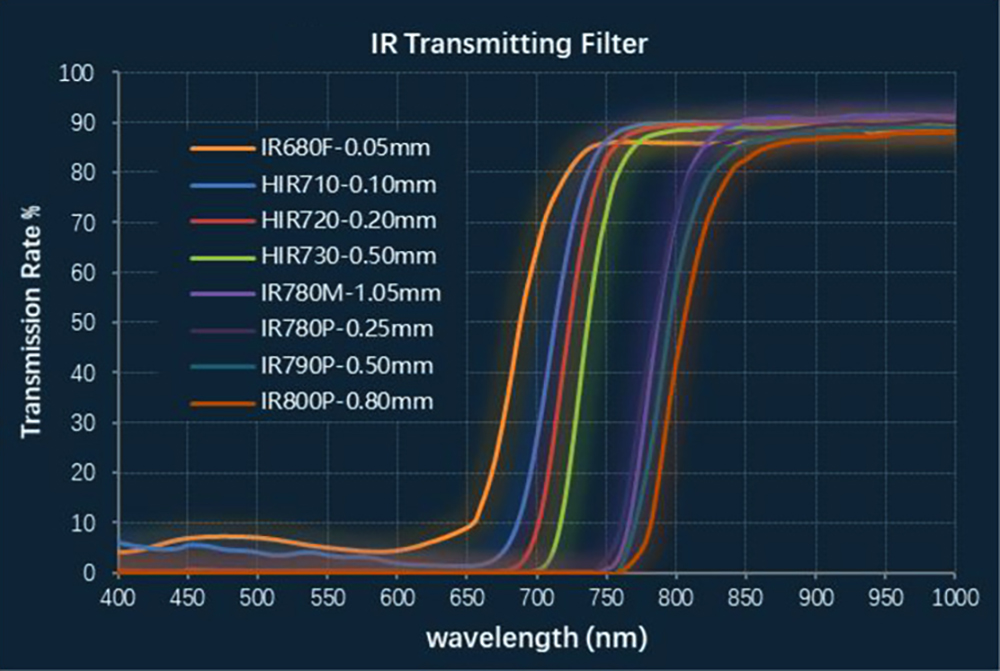
IR Transmission: Blocks visible light (appearing black to the human eye) while allowing Near-Infrared (NIR) signals to pass through. Essential for infrared sensor housings.
In optoelectronic sensing applications, signal loss directly impacts device sensitivity.
High Penetration: Premium IR transmission masterbatch ensures a transmission rate of over 88% in the 850nm – 940nm wavelength.
Visual Concealment: It maintains superior visible light blocking properties. This protects internal precision circuitry from view and UV degradation without interfering with infrared signal integrity.
In the Industry 4.0 era, AGVs (Automated Guided Vehicles) and smart forklifts rely on IR sensors for obstacle avoidance and positioning. Sensor covers manufactured with high-performance IR masterbatch protect expensive LiDAR hardware while ensuring “zero-interference” transmission of laser signals, significantly enhancing operational safety.
By adjusting the masterbatch formulation, manufacturers can create “selectively permeable” films. These block infrared heat during hot summers (cooling) and retain ground radiation in winter (warming), drastically reducing a facility’s carbon footprint.
Traditional carbon black masterbatch absorbs infrared light, making black plastic invisible to automated sorting machines. NIR Detectable Masterbatch allows infrared reflection, making black waste “visible” on recycling lines—a key factor in achieving a circular economy.
Following the standards of the world’s top 20 industry leaders, our products offer:
Superior Dispersion: Eliminates “fish-eyes” or spots in thin films and precision injection parts, ensuring consistent optical performance.
Thermal Stability: Formulated to withstand multiple processing cycles without yellowing or shifting the infrared band.
Customized Wavelengths: We can tailor transmission curves to your specific sensor requirements (e.g., 905nm LiDAR systems).
When selecting an IR Masterbatch, price should not be the only factor. The Total Cost of Ownership (TCO) depends on the addition ratio, the impact on mechanical properties, and the final yield rate.
Expert Tip: Before moving to mass production, we recommend a full spectral scan. Our laboratory provides detailed measurement reports for the 700nm – 1100nm range.
Learn more knowledge and trends in masterbatch industry from our blog.

When it comes to coloring or imparting additional properties to nearly every thermoplastic, opting for masterbatch is an obvious choice.

In the realm of plastic product manufacturing, safety stands as a paramount concern. Beyond its role in achieving consistent color and properties, masterbatch proves to be a crucial element in ensuring both your safety and the safety of the products you create.

Filler masterbatch plays a significant role in various aspects of the plastic industry. So, what precisely is filler masterbatch, and how is it incorporated into plastic production? Let’s explore these aspects in the following discussion.
©2023. Masterbatch Manufacturer All Rights Reserved.
Our team will send back the best offer in 20 minutes.